Buyer note
The 'Heavy Duty' Label on Your Industrial Vacuum Cleaner Is Nearly Meaningless
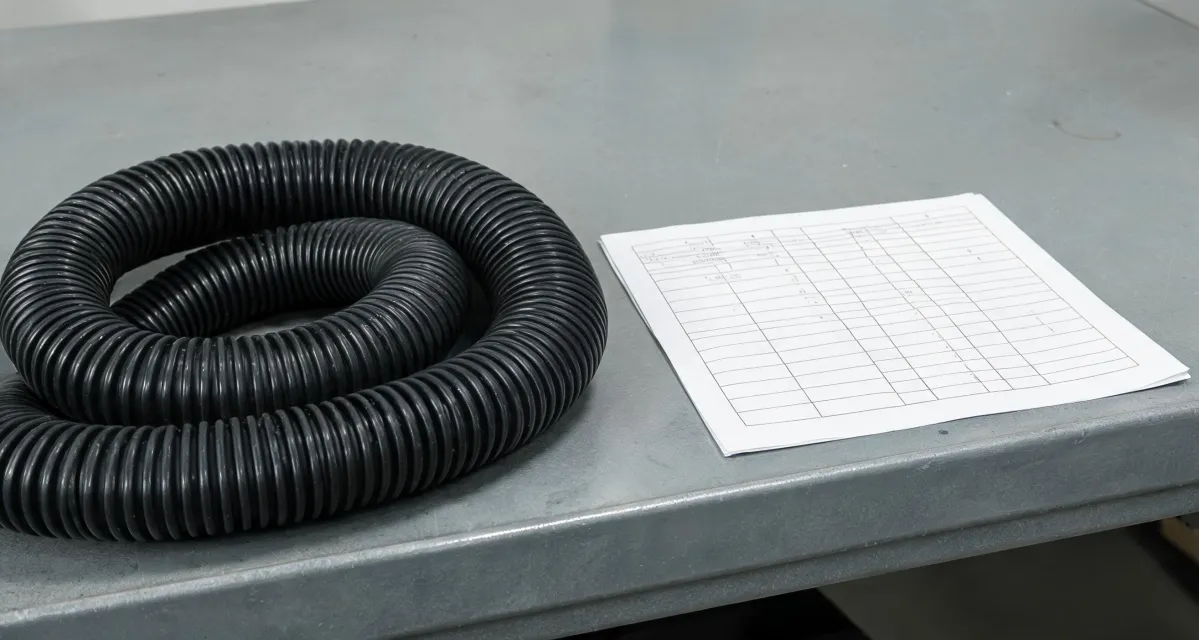
Over two years and 120+ rush orders, I'll say it plainly: the phrase "heavy duty" on an industrial vacuum cleaner spec sheet means almost nothing. So does "low noise," unless you know how the number was measured.
It's 2026, and the industrial vacuum cleaner sourcing conversation has moved. Not CFM. Not motor wattage. Not price per unit. What matters is how the noise was measured, what's actually sealed, and how close the service radius is when something breaks. The buyers still comparing quotes on $40 per unit are the ones calling us at 4 p.m. on a Friday.
The Noise Rating Isn't the Feature — It's the Fingerprint
People think a low noise industrial vacuum cleaner costs more because you're paying for sound insulation — thicker housing, a muffler, foam somewhere inside. That's not what's happening.
The quiet machines aren't quiet because someone bolted on insulation. They're quiet because the housing seals, the hose joints fit, the filter gasket seats properly, and the airflow path doesn't whistle. Quiet is the byproduct of good tolerance. And the places where noise escapes — panel edges, filter ports, hose collars — are the same places where dust escapes.
So a 68 dBA machine isn't just easier on the operator's ears. It's usually the one that holds a HEPA-class filter tight at the gasket instead of blowing fine dust back into the room. That's not an opinion. It's the same seal line doing two jobs — one against sound, one against particulate.
This is the part most buyers get backwards. They think: quiet = extra money spent on a feature. The reality is: good manufacturing = quiet and tight. The noise number is the visible signal, but it isn't the thing you're buying.
What "Low Noise" Means on a Spec Sheet (Usually Nothing)
In January 2025 I pulled four suppliers' spec sheets side by side. All four advertised a low noise industrial vacuum cleaner. Three didn't state the measurement distance. Two didn't state whether the figure was measured loaded or unloaded. One cited a standard number but never said whether the number was sound pressure or sound power — and those two figures can differ by 10 dBA or more, which is a very convenient thing to leave ambiguous.
I've lost money on this one. In October 2024 we sourced eight units for a warehouse client. Lowest quote in the batch, dBA looked fine. I knew I should have insisted on both pressure and power figures from the same dated test report on the same machine, but figured "how much difference can it make?"
Nine dBA. That's roughly double the perceived loudness. The client measured it next to the filling line — the exact spot we'd promised wouldn't be loud. We ended up shipping acoustic shrouds for every unit, and the per-unit saving disappeared into the retrofit.
What that taught me: rush orders don't start when equipment fails. They start at the spec sheet, when somebody buys a machine they can't verify and finds out at the wrong moment.
For reference, OSHA 29 CFR 1910.95 sets the eight-hour noise exposure limit at 85 dBA (checked January 2025; the number hasn't moved in decades). NIOSH publishes a matching 85 dBA recommendation. Those are exposure limits, not equipment specs — but they're why the difference between a 62 dBA unit and a 71 dBA unit isn't a matter of taste on a busy floor.
If you're looking at an industrial vacuum cleaner for sale on a marketplace listing or a trade show floor, and the seller won't answer the measurement-distance question, that number was written by marketing, not by an engineer.
At Wholesale Volume, the Argument Shifts From Price to Spares
Five years ago, wholesale industrial vacuum cleaner sourcing was mostly a grind on unit price — more units per layer, lower price per unit, done. That still matters. The structure around it has changed.
Our internal data from the last two years: most emergency calls we handle aren't broken machines. They're broken parts — filters, hoses, floor tools, motors — with nobody holding stock. The vacuum itself is usually fine. A $60 component is sitting next to it, idle.
This is where "heavy duty" should earn its keep, and it's exactly where the word gets infuriating. There's no standard definition. To one supplier it means 24/7 continuous operation. To another it means dual motors. To a third it means a thicker carton. The label carries no obligation. The duty-cycle definition — continuous load, duty rating, filtration class, motor type — is the part that maps to how you actually use the equipment.
The counterintuitive bit: at volume, the mid-priced wholesale source often wins once you're sorting by uptime instead of sticker. The cheaper one saves you $40 a unit and has no service radius in your region and a six-week lead time on consumables. That $40 buys you one line stoppage.
The Three Objections I Always Get
"This sounds like a rich man's answer." It isn't. I'm not telling you to buy the most expensive machine. I'm telling you to stop sorting quotes by per-unit price first. Put a filter in front of it — noise with test conditions, a service radius near the site, availability on the wear parts — then compare price within that pool. Most of the time you'll land mid-range, because that's where downtime costs less. That's still saving money. Just a different kind.
"But isn't heavy duty the whole point?" It is — once someone defines it. Ask them to put it in writing: continuous load, duty rating, filtration class, motor type. Vendors who answer that cleanly are typically the same ones you'd actually want to call.
"How do I verify any of this without a test lab?" Four questions. Which standard? What distance? Loaded or unloaded? Sound pressure or sound power? Then ask for a dated report tied to a serial number. Honest suppliers reply quickly. The ones who can't are telling you something useful by not answering.
Restating It Plainly
None of this is an argument that cheap equipment is bad. It's an argument that a low sticker price on a machine you can't service isn't low. The old approach — whoever quoted least wins — compressed a total-cost decision into a single number. That's how you end up in a rush situation in the first place.
For industrial vacuum cleaner sourcing in 2026, the screen shouldn't look like it did in 2020. Noise is still the number that's visible, but you read it differently now — as evidence of sealing, filtration integrity, and build tolerance, not as a comfort feature. And "heavy duty" is a definition on paper in front of you, not two words on a carton.
I've handled too many Friday afternoon calls to pretend otherwise. Most of them were decided the day the quote went out.
That's the frame we built our own sourcing process around. It's also why our first question about any request is what the equipment will actually do, not how many you need.

Jane Smith
I’m Jane Smith, a senior content writer with over 15 years of experience in the packaging and printing industry. I specialize in writing about the latest trends, technologies, and best practices in packaging design, sustainability, and printing techniques. My goal is to help businesses understand complex printing processes and design solutions that enhance both product packaging and brand visibility.
Ask about this note
Use the shared inquiry. Name the vacuum, quantity, destination, and the test basis you want quoted. The note above stays general. Your requirement text is the request.