Guided RFQ preparation
Low noise industrial vacuum cleaner
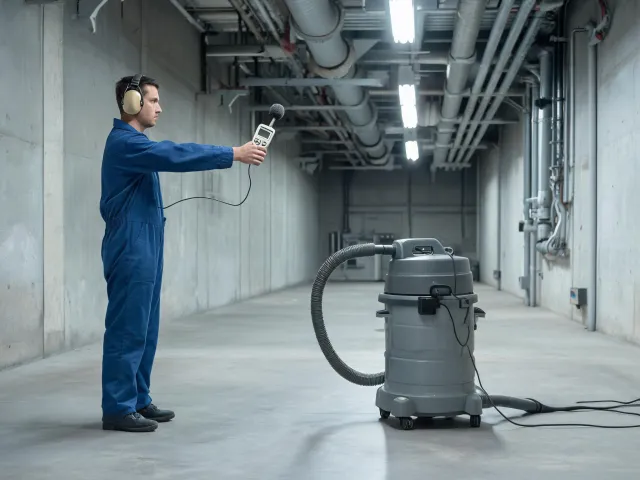
A low noise industrial vacuum cleaner request fails when the quieter number comes from a different test. Write the dB(A) limit you care about, the distance from the machine, and whether the floor tool is fitted. Then ask each factory to answer on that setup. A smaller headline without the distance is not a quieter machine.
Noise is one constraint among cleaning path, tank volume, filtration, and the hours the aisle is occupied. Lower sound can arrive with a larger housing, a different fan speed, or an added silencer. Each of those changes the crate, the price line, and sometimes the airflow. Keep them as separate questions.
Cost layers that move when noise is a requirement
-
Base machine at a stated duty
Motor power and duty cycle at the speed used for the noise test. If the quiet setting reduces airflow, ask for both points on one curve.
-
Acoustic hardware
Enclosure panels, an exhaust silencer, or isolation pads. Mark each as included or optional. Do not fold them into a vague quiet package.
-
Filters under the same housing
A tighter cartridge can change both dust release and the pressure the fan works against. Ask whether the noise test used a clean filter or a loaded one.
-
Freight of the larger crate
Acoustic covers add millimetres and kilograms. Update gross weight before you compare Incoterms. The US destination stays on every offer.
-
Commissioning and training
Who explains the speed setting that was tested, and whether a factory acceptance test includes a sound reading. If the supplier will not measure on site, say who will.
Standard machines can be enough when the published noise, at a distance you accept, already sits under the limit your safety lead wrote down. A custom silencer is a different configuration and should not be compared with the standard crate as if the scopes matched. Both paths are legitimate. The checklist exists so the team picks one before the quotations arrive.
A repeatable sound check names the room or aisle, the meter height, and the distance, for example 1.0 m from the housing with the floor tool fitted and a clean filter. Power is the nameplate voltage, such as 120 V or 230 V at 60 Hz. Record dB(A), the fan speed, and whether the figure is a single reading or an average. Steps the supplier can repeat are: mount the agreed hose, for example 40 mm or 50 mm, run five minutes, read the meter, then repeat with a loaded filter if that is your real duty. Missing the distance or the tool state means the quieter number cannot be copied into the comparison table.
Set three shapes side by side before you call any of them low noise: an open canister, the same canister with an exhaust silencer, and a housed unit with a lower fan speed. The lines that matter are the dB(A) basis, the airflow change in m3/h, the added millimetres of crate height, and the filter cost per month if you already know the change interval. Four lines times three shapes is the comparison. A lower fan speed can cut sound and also cut airflow. An added silencer can hold airflow and raise freight. Write the trade rather than a single quiet label. The same table should carry duty cycle, rated power, input voltage, working envelope, control interface, utilities requirement, commissioning scope, bill of materials, spare parts list, specification deviation, delivered cost, service access, ambient temperature, ingress protection, repeatability, and noise level. Sample blanks are 68 dB(A) versus 74 dB(A) at 1.0 m, 180 m3/h versus 320 m3/h, a crate of 900 mm versus 1200 mm, and filter changes at 40 hours versus 80 hours. Those blanks are prompts for the supplier, not measurements from this desk.
Quote questions for a noise-constrained release
Which currency and which unit?
State USD or another currency, and whether the optional budget is per vacuum or for the whole order. A range is allowed. It does not have to match a live price you have already received.
What does the Incoterm cover?
Export crate, main carriage, and insurance are different lines. Two offers can both look complete and still stop at different points. Write the point you want priced, and record any offer that stops earlier as a deviation.
Are consumables and spares in the same commercial envelope?
A spare cartridge, a second hose, and a wheel kit change the comparison even when the motor price matches. Preventive maintenance kits, if offered, need a model tie. Leave them out of both offers if you are not ready to specify them, rather than including them on one side.
How should supplier preference be read?
High-end, mid-range, budget, or undecided is your buying posture for documentation and hardware depth. It is not a score this desk has verified. You can send the inquiry before any quotation exists.
Cross-functional readers can split the work: operations names the occupied hours, engineering locks the test distance, procurement keeps the commercial envelope identical. The handoff still fits in one requirement box. Supporting pages: equipment labels, evidence matrix, inquiry form, and the procurement brief.
Hold the offers until the noise basis matches
Compare proposed specifications after each supplier repeats your distance, your tool setup, your quantity, and your destination. If one offer uses a different microphone position, park it until they restate the reading or you accept the deviation in writing. No countdown and no fixed reduction is attached to that review.
Prepare a Comparable RFQ