Machine
Exact proposed model, dry or wet duty, and whether the motor is rated for continuous hours or a stated duty cycle. Ask for rated power in kilowatts or horsepower with the test basis.
Independent sourcing partner
An industrial vacuum cleaner request starts with the debris, the floor, and the shift, not with a catalog photo. Tell the desk whether the machine must pick up dry powder, metal chips, liquid, or a mix, and whether the operator walks a line or stays at one station. Those facts decide which factories should even see the brief.
Write the machine type you have in mind, the cleaning path in millimetres or inches, and the tank or hopper volume in litres or gallons. Add input voltage, frequency, and phase if the plant already knows them. Airflow in cubic metres per hour or CFM, and vacuum in kilopascals or inches of water, belong on the same line as the test condition the datasheet uses. A headline airflow without an orifice or hose diameter is a screening number, not a purchase basis.
Request Factory Quotes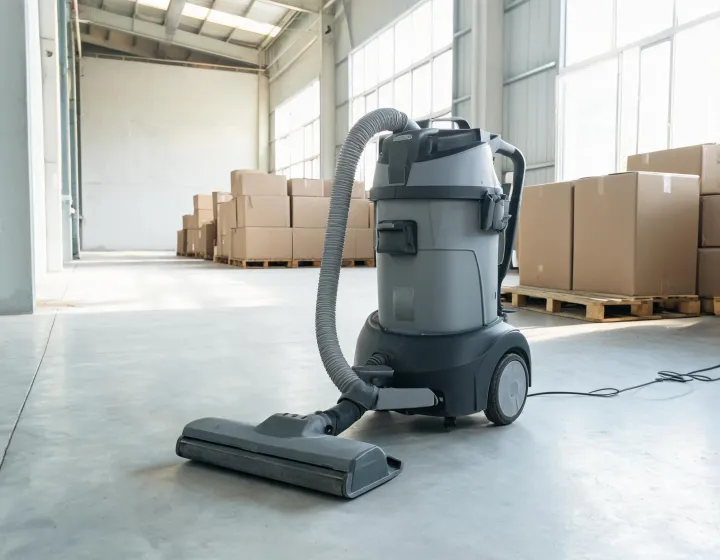
Delivered cost is the sum of what the quotation actually includes. Industrial Vacuum Cleaner Sourcing does not publish a price or a saving. Use the layers below as a checklist so a lower machine line does not hide a missing filter kit or a different Incoterm.
Exact proposed model, dry or wet duty, and whether the motor is rated for continuous hours or a stated duty cycle. Ask for rated power in kilowatts or horsepower with the test basis.
Floor tool width, crevice tools, overhead wands, and hose diameter. Mark each item as included, optional, or excluded so the bill of materials matches the drawing.
Filtration class, bag or cartridge count, and a spare parts list for the release you are buying. Consumables are a repeat cost, not a footnote.
Crate size, gross weight, and the Incoterm. Name the US destination and who pays duties. A machine price without freight is not a delivered cost.
Commissioning scope, operator training, and whether a factory acceptance test is offered for this model. State who attends and what is recorded.
Stay inside industrial vacuums. A floor scrubber, a ride-on sweeper, or a central dust collector is a different family and needs its own request. For each row, the process, the condition, the interface, and the file are questions for the proposed supplier.
| Application | Process | Condition | Interface | File to request |
|---|---|---|---|---|
| Warehouse aisle | Dry fines on sealed concrete | Ambient temperature and shift length | Floor tool width and cord or battery | Airflow curve and noise level at a stated distance |
| Packaging hall | Paper dust and light film scraps | Indoor, splash risk unknown | Hose reach and control interface | Filter media sheet and service access drawing |
| Metal shop | Chips, not a flood of coolant | Abrasive debris, indoor | Inlet diameter and tank dump method | Material of the tank and grounding note |
| Food plant dry area | Loose powder on a defined zone | Washdown expectation still open | Tool material and gasket type | Food-contact statement if the supplier claims one |
Throughput in square metres per hour is useful when the supplier states the tool width, the travel speed, and whether overlap is included. Do not convert a tank volume into a coverage rate yourself. Utilities requirement covers voltage plus any compressed air the tool needs. If either utility is unknown, leave the cell open.
An early screen can still be numeric without pretending the numbers are confirmed. Ask whether a 50 mm hose, an 80 L tank, 230 V at 60 Hz single phase, and a noise level near 70 dB(A) at 1 m even belong in the family you want quoted. Rated power in kilowatts, duty cycle, ingress protection, and repeatability of the airflow figure stay blank until the datasheet for that model states the orifice and the motor speed. A public cleaning-equipment specification page, the Tennant T300 sheet at tennantco.com, shows how a maker lists path, tank, and sound. It is not a vacuum offer and it does not transfer any rating to a machine you have not named.
Lowest purchase price and comparable lifecycle scope are both legitimate readings. The smaller machine line helps when the hose, the included filter set, freight, and training already match. The lifecycle reading adds cartridges, a spare wand, and the Incoterm before either offer is called complete. Write both readings in the note. This desk does not choose one for you, and it does not publish a market percentage.
Read the heavy duty labels, the evidence sequence, and the low-noise checklist before you send numbers. The procurement brief lists the same fields in article form.
Input voltage, frequency, and phase have to match the receptacle or the disconnect the site already has. A dual-voltage sticker is not confirmation until the proposed supplier marks the wiring used for your order. Ask for the full-load current on that wiring.
State the inside diameter and the cuff style. A similar photo does not prove the cuff seals. The supplier should name the inlet on the exact model and list any adapter as included or extra.
Name the dust in plain language and ask for the filtration class on the quoted cartridge, not on a sister model. Wet pick-up and dry powder often need different tanks and different filters. Do not assume one machine covers both.
A noise level in dB(A) is comparable when distance, height, and whether the tool is attached are the same. If the datasheet omits the distance, record the gap instead of treating the smaller number as quieter.
Specification deviation belongs in the same note. If a factory offers a different hose or a different filter, ask them to label it as a deviation rather than a silent substitute.
Submit Procurement RequirementsFREE sourcing support
Sourcing support for a qualified order is subject to an up to 3% ceiling after the product, quantity, destination, and documents are reviewed.
Eligibility applies to qualified business buyers and is confirmed after we review your product, quantity, destination, and sourcing requirements.